Washington, Jan 4
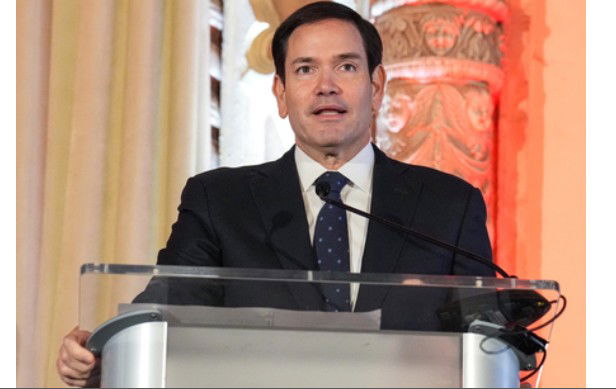
US Secretary of State Marco Rubio said the arrest of Venezuelan leader Nicolas Maduro was intended to send a clear message to governments and leaders around the world that the United States will act decisively when its national interests are threatened.
Speaking after President Donald Trump announced the operation, Rubio told reporters in Mar-a-Lago that Maduro was “not the legitimate president of Venezuela” and stressed that his status as a fugitive was widely recognized internationally.
“That’s not just us saying it,” Rubio said, noting that the first Trump administration, the Biden administration, and the current administration had all declined to recognize Maduro, along with the European Union and “multiple countries around the world.”
Rubio said Maduro had been indicted in the United States in 2020 and carried a $50 million reward. He added that Maduro had “multiple opportunities to avoid this,” but instead chose confrontation. “He was provided multiple very, very, very generous offers and chose instead to act like a wild man,” Rubio said.
Framing the operation as a broader signal, Rubio said some leaders believe they can “play games” with Washington without consequences. He listed what he described as Maduro’s actions, including inviting Iran into Venezuela, confiscating American oil assets, flooding the United States with gang members and attempting to trade detained Americans.
“Basically, likes to play games all this time and thinks nothing's gonna happen. And I hope what people now understand is that we, we have a president. The 47th President of the United States is not a game player. When he tells you that he's going to do something, when he tells you he's going to address a problem, he means it. He actions it,” Rubio said.
Rubio said the Venezuela operation underscored a style of leadership that relies on action rather than rhetoric. “This is not a president that just talks and does letters and press conferences,” he said. “If he says he’s serious about something, he means it.”
Addressing questions about congressional notification, Rubio defended the administration’s decision not to brief lawmakers in advance. “This was not the kind of mission that you can do congressional notification on,” he said, describing it as a “trigger-based mission” that depended on specific conditions being met. He said advance notice would have “endangered the mission.”
Rubio emphasised that the operation was, at its core, a law enforcement action. “This was an arrest of two indicted fugitives of American justice,” he said, adding that the Department of War supported the Department of Justice in carrying out the mission.
He also issued pointed remarks about Cuba, describing the country as “a disaster” and saying its leadership should be concerned. Rubio said Cuban security personnel had played a significant role in protecting the Maduro government. “If I lived in Havana and I was in the government, I’d be concerned at least a little bit,” he said.
Rubio said the events in Venezuela were meant to be instructive beyond the region. “Don’t play games with this president when he’s in office,” he said. “Because it’s not going to turn out well.”
The remarks come as Washington seeks to reassert influence in the Western Hemisphere, where US officials increasingly link regional stability, migration, energy security and great-power competition to broader global security concerns.