Washington, Dec 23
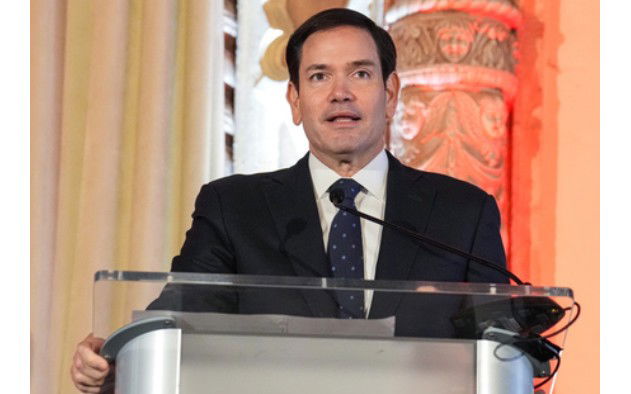
US Secretary of State Marco Rubio said the American naval dominance is a central pillar of global peace and stability, and argued that the US Navy's strength underpins freedom of navigation, deters conflict, and sustains the international order.
At a Mar-a-Lago news conference alongside President Donald Trump, Secretary of War Pete Hegseth and Navy Secretary John Phelan, Rubio said the administration’s renewed focus on shipbuilding and maritime power was not simply a military initiative but a strategic statement about America’s role in the world.
“The US Navy is the single biggest source of peace in the world,” Rubio said, describing American sea power as the foundation of global stability.
Rubio said the Navy’s global footprint allows the United States to protect sea lanes, reassure allies, and deter adversaries, while also reinforcing American industrial strength at home. He described the administration’s shipbuilding push as a tangible demonstration of national capacity.
“This is American industrial power returning,” Rubio said. “This is the ability to make things again in our country.”
He said rebuilding US shipbuilding capacity sends a clear signal internationally that the United States intends to remain a maritime power capable of projecting strength across oceans and maintaining open access to the global commons.
“The ability to make things again in our country has been critical to what the president’s agenda has been all about,” Rubio said, calling the announcement a reminder of America’s enduring industrial and military base.
Rubio argued that naval power is inseparable from diplomacy, saying US forces provide the physical assurance that allows international trade and alliances to function. He said American sea power has historically prevented conflicts rather than provoked them.
“The US Navy gives us a global footprint,” he said, adding that generations of Americans have benefited from the stability provided by US maritime dominance.
He described the shipbuilding initiative as “generational in the change,” saying it strengthens America’s ability to protect the seas while reinforcing domestic industry and employment.
“This is generational in the change,” Rubio said, linking the expansion of naval capabilities with long-term strategic planning rather than short-term military needs.
Rubio also praised the President’s focus on rebuilding US manufacturing alongside military power, saying the two are inseparable in sustaining American influence abroad.
Rubio’s remarks underscored the administration’s broader argument that economic strength, industrial capacity, and military power form a single strategic ecosystem, with naval dominance at its core.
The emphasis on maritime power reflects long-standing US strategic thinking that control of sea lanes is essential to global trade and security.
The US Navy has historically maintained a forward presence across the Indo-Pacific, Atlantic, and Middle East, supporting allies and safeguarding commerce.
For countries such as India, which rely heavily on secure sea lanes for energy supplies and trade, US naval power has been a key factor in maintaining stability across the Indian Ocean and beyond.